
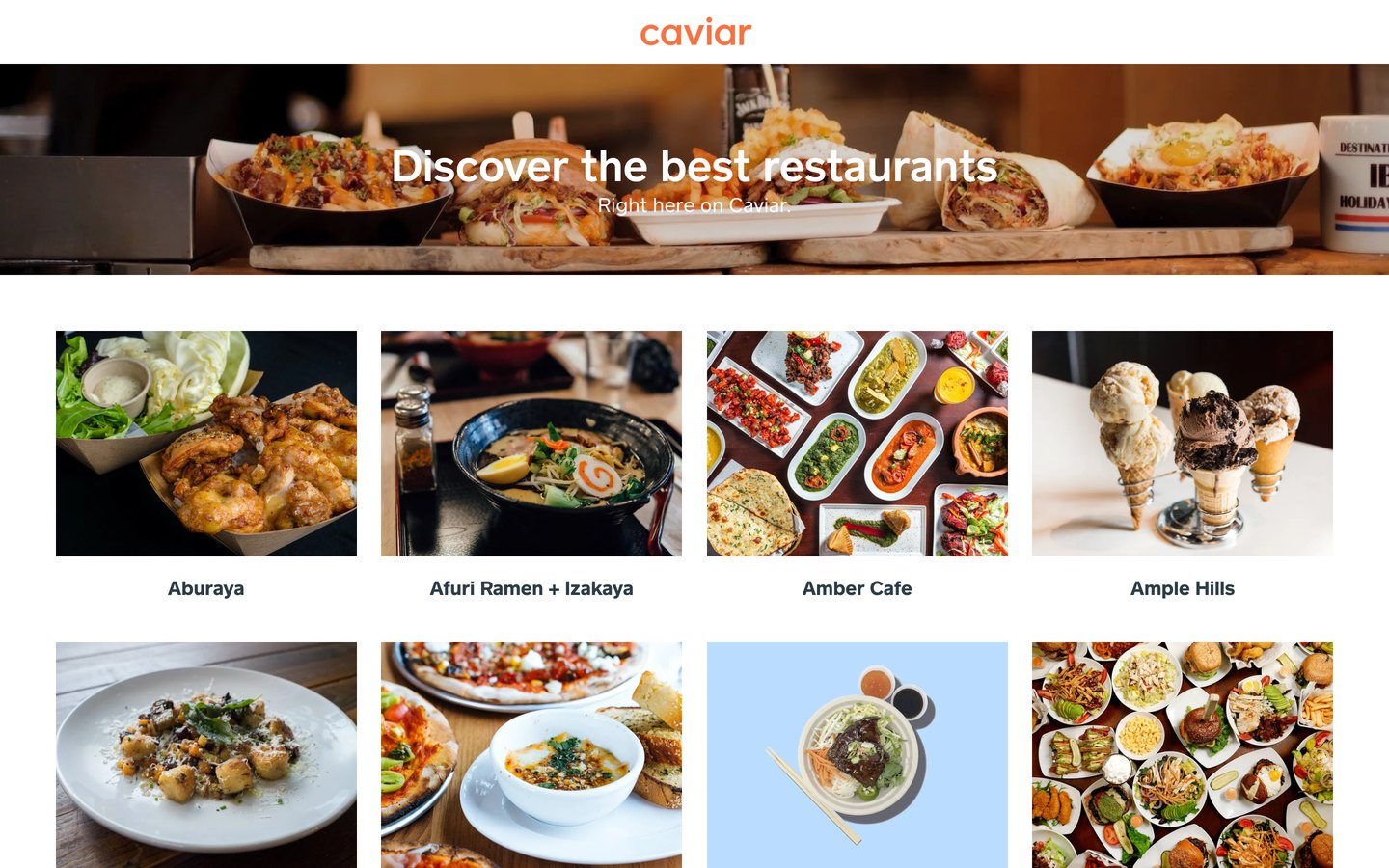
When DoorDash acquired Caviar, the premium restaurant delivery service, it inherited Caviar’s codebase along with it. Merging two products means merging two stacks, and that takes longer than anyone wants it to. In the meantime, the restaurant pages still had to be live.
The situation
Caviar’s restaurant pages ran on Caviar’s code. DoorDash’s engineers were moving that code onto DoorDash’s stack, and more than 250 restaurant pages sat in the middle of the migration. They couldn’t go dark, and they couldn’t wait on the rebuild.
What DoorDash needed was a bridge: a site that could go up in a week, hold every restaurant, look like it belonged to the brand, and get retired without ceremony once engineering caught up.
The work
The interim site was custom-built on Squarespace, which sounds like an odd pick for a company with DoorDash’s engineering team until you remember the brief. Fast, disposable, and off engineering’s plate.
The trick was building one restaurant page right. A single template carried the layout, the banner photo, the menu, and the ordering details. Then it was duplicated and filled in, restaurant by restaurant and location by location, from Aburaya to XLB Chinese, 250 times over.
An index page pulled them together under one line: discover the best restaurants.
The same engagement included a rebuild of trycaviar.com, Caviar’s public site, in about a week and a half. The layout and concept were locked in Figma first so nothing got decided twice. Then it was built in Squarespace with micro-animations added and every transition checked so it didn’t feel like a template.
The outcome
The interim site did its job and was retired when the migration finished, which was the whole point. trycaviar.com has since moved to a custom build inside DoorDash.
A stopgap that gets replaced on schedule isn’t a site that failed. It’s a site that bought a company the time it needed.